News
A higher debt limit could open Chapter 13 bankruptcy to more people.
Both houses passed the Bankruptcy Threshold Adjustment Act. Until it becomes law, the current Chapter 13 debt limits still apply.
What the bill would change
A bill passed by both houses of Congress would make Chapter 13 bankruptcy available to more people with high levels of debt, including homeowners in expensive housing markets and small-business owners who are personally responsible for business loans.
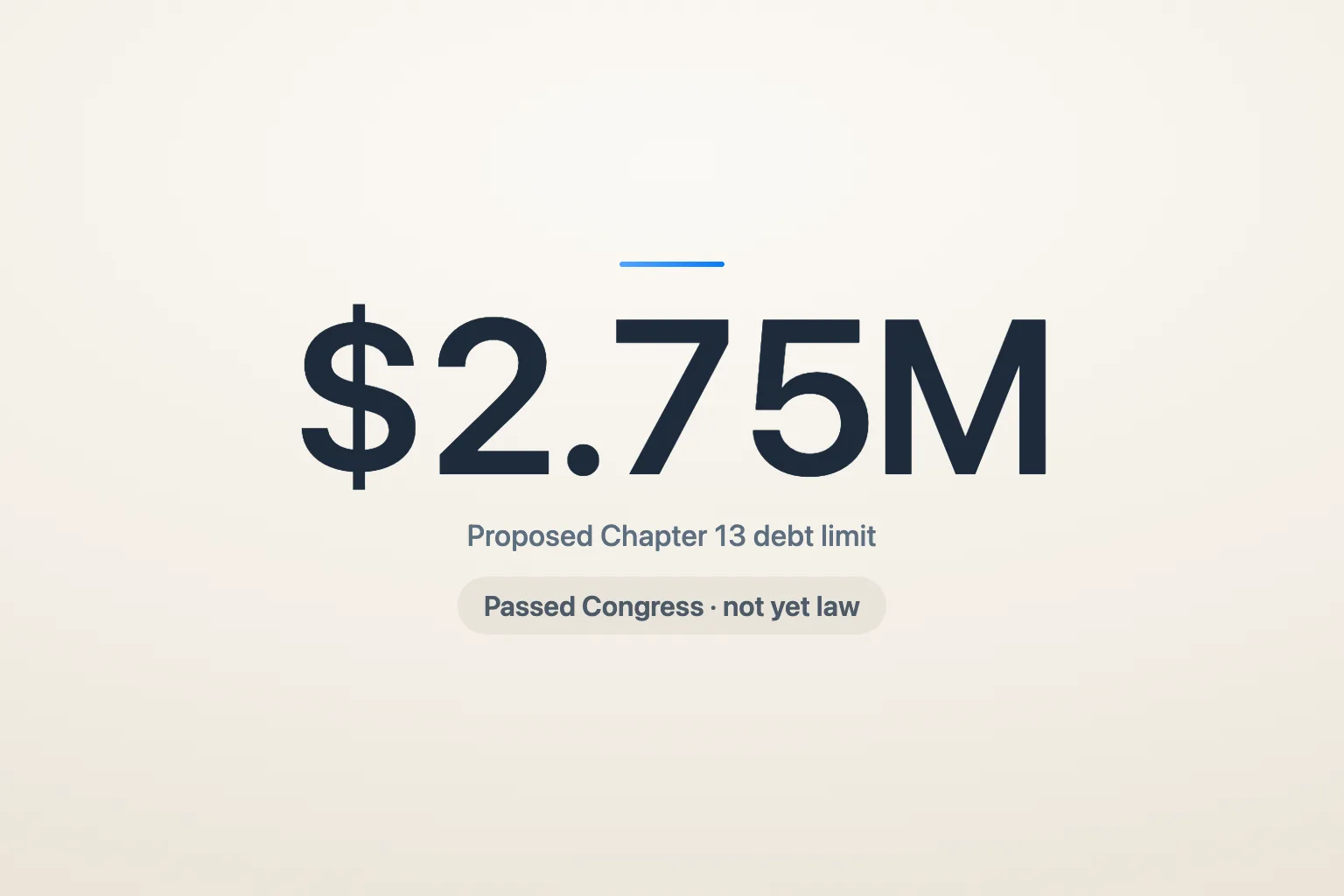
Under the Bankruptcy Threshold Adjustment Act (H.R. 7730), an individual with regular income, or that individual and a spouse, could qualify for Chapter 13 if their noncontingent, liquidated debts add up to less than $2.75 million. The bill would also replace the separate limits for secured debts, such as mortgages, and unsecured debts, such as credit cards, with one combined limit.
Who it could help
That change could be especially important for homeowners in high-cost states such as New York and California. A large mortgage can push someone above the existing Chapter 13 limit even if the person has steady income and wants to repay creditors through a court-approved plan. Business owners who personally guaranteed company debts could also benefit.
Chapter 13 generally allows people with regular income to reorganize their debts through a repayment plan rather than using a business-focused Chapter 11 case. The higher limit would not erase debt automatically or guarantee that a repayment plan will be approved. It would instead allow more heavily indebted consumers to seek Chapter 13 relief.
Where the bill stands
The House passed the bill on September 16, 2026, and the Senate passed it on September 28, 2026. As of October 22, 2026, it had not been signed into law. The higher limit would apply only to cases filed on or after the date it becomes law.
Until then, the current limits apply. To be eligible for Chapter 13 today, unsecured debts must be less than $526,700 and secured debts less than $1,580,125. These amounts are adjusted for inflation every three years.
What it means for consumers
For consumers struggling with large mortgages, personal guarantees, credit cards, medical bills, or other debts, the main effect would be broader access to Chapter 13 once the bill becomes law. Eligibility would still depend on the person’s income, the amount and type of debt, and the facts of the individual case.
Sources & further reading
- Congress.gov: H.R. 7730, Bankruptcy Threshold Adjustment Act
- GovInfo: H.R. 7730, enrolled bill text
- Federal Register: Revision of Certain Dollar Amounts in the Bankruptcy Code (February 4, 2025)
General information, not advice about your circumstances. Read the original sources for their full definitions and context. Statistics describe the stated period, not a personal outcome.