News
Credit card debt is rising, and carrying a balance can become costly.
Revolving balances made up more than half of September's rise in consumer credit. Warning signs to watch for, and why the minimum payment may not be enough.
The numbers
Credit card and other revolving debt rose sharply in September 2026, contributing to a broader increase in consumer borrowing. According to data released by the Federal Reserve on November 6, total consumer credit increased at an annual rate of 6.4% in September, up from 1.9% in August. Outstanding consumer credit reached approximately $5.22 trillion.
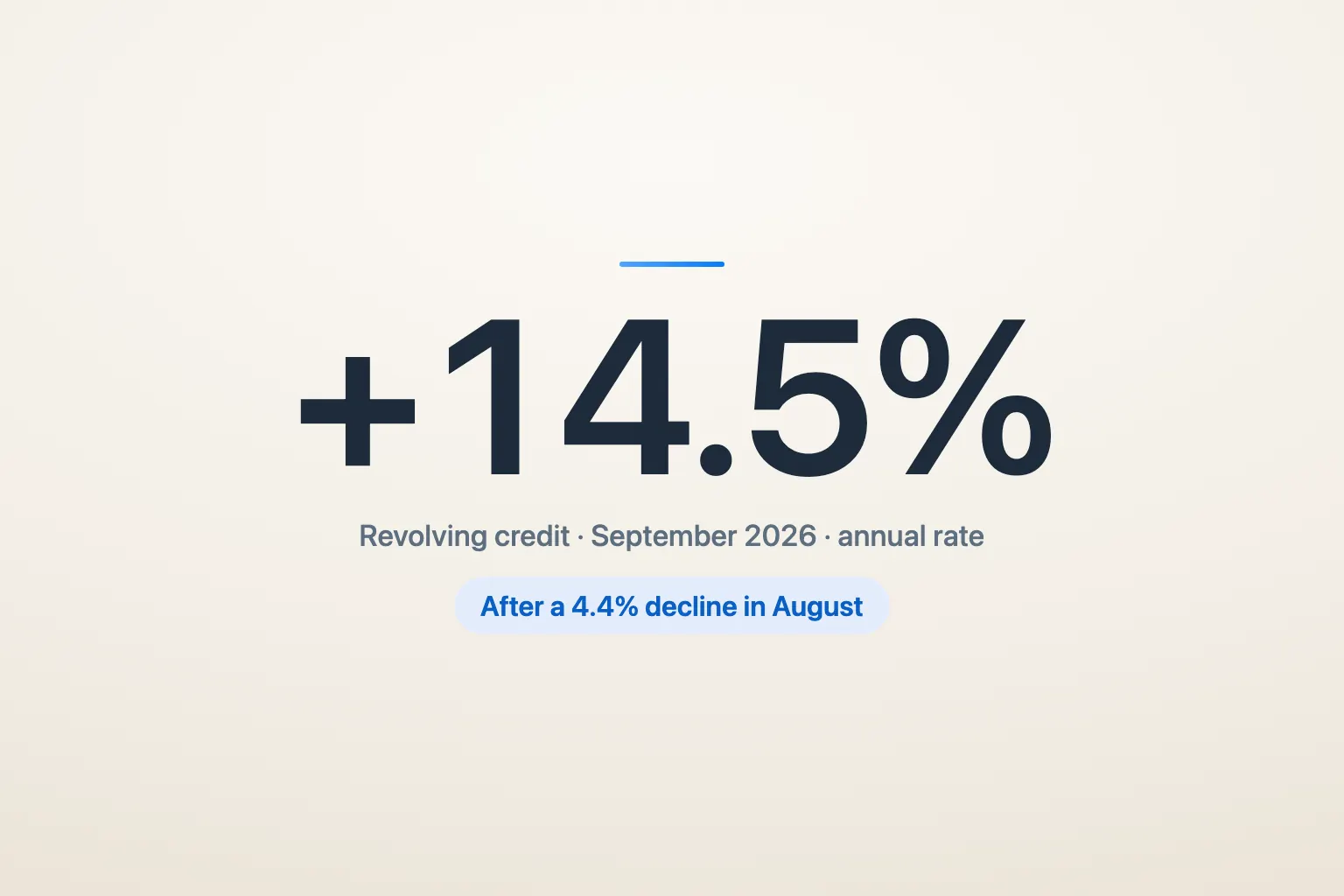
Revolving credit, which consists mostly of credit card debt, grew at a 14.5% annual rate in September. That followed a revised 4.4% decline in August. On a monthly basis, revolving balances increased by an estimated $16.3 billion and accounted for more than half of September's overall increase in consumer credit.
These annual rates describe the pace of borrowing during the month as if it continued for a full year. They do not mean that revolving debt actually increased by 14.5% in September alone.
“Revolving debt” generally refers to credit that can be borrowed, repaid, and borrowed again. Credit cards are the most familiar example, although the Federal Reserve's revolving-credit category also includes certain other accounts, such as prearranged overdraft plans. Unlike a loan with a fixed repayment schedule, a credit card balance can remain outstanding from month to month while interest continues to accrue.
Why credit card balances can be difficult to reduce
When a cardholder does not pay the full statement balance, interest can make repayment more difficult. Part of each future payment goes toward interest rather than reducing the original balance.
The Federal Reserve's most recent quarterly data, for the third quarter of 2026, showed an average annual percentage rate of about 22.4% on credit card accounts that were assessed interest. At rates near that level, carrying a balance can add substantially to the total amount repaid, particularly when a cardholder continues making new purchases.
Most credit cards also have variable interest rates. As a result, the cost of carrying a balance can change as broader interest rates move.
This can create a difficult cycle. A household may rely on credit cards to cover ordinary expenses, but the resulting interest charges can leave less money available the following month. If new purchases continue while the existing balance remains unpaid, the debt may become harder to manage.
Signs that credit card debt is becoming a larger problem
A balance does not need to be unusually large before it creates financial strain. Warning signs may include making payments without seeing the balance decline, using one card or loan to pay another, relying on credit for routine expenses because income is already committed, missing payments or paying after the due date, and falling behind on other obligations to keep credit cards current.
These problems can build gradually. What begins as a short-term solution may become a long-term obligation, particularly when interest and new charges are added each month.
Looking beyond the minimum payment
The minimum payment may keep an account from becoming immediately delinquent, but it does not necessarily provide a quick path out of debt. Understanding the interest rate, monthly interest charges, and amount going toward principal can provide a clearer picture of whether the balance is actually decreasing.
The September figures do not show that every type of borrowing increased at the same pace. Nonrevolving credit, which includes auto and student loans, grew at a more moderate annual rate of 3.6%. The sharp rebound in revolving balances was a major reason overall consumer-credit growth accelerated during the month.
The broader takeaway is straightforward: rising revolving debt is not only about how much consumers borrow. It is also about how long balances remain unpaid and how much interest adds to the cost. Recognizing the problem early can leave more options for bringing payments and balances back under control.
Sources & further reading
- Federal Reserve: G.19 Consumer Credit, September 2026 (released November 6, 2026)
- Federal Reserve: About the G.19 Consumer Credit release
- CFPB: The Consumer Credit Card Market (December 2025)
General information, not advice about your circumstances. Read the original sources for their full definitions and context. Statistics describe the stated period, not a personal outcome.