News
U.S. bank overdraft fees rise to a four-year high
After years of decline, overdraft-fee revenue is rising again. How it fell after 2019, and what the new increase does and does not mean for bank customers.
The numbers
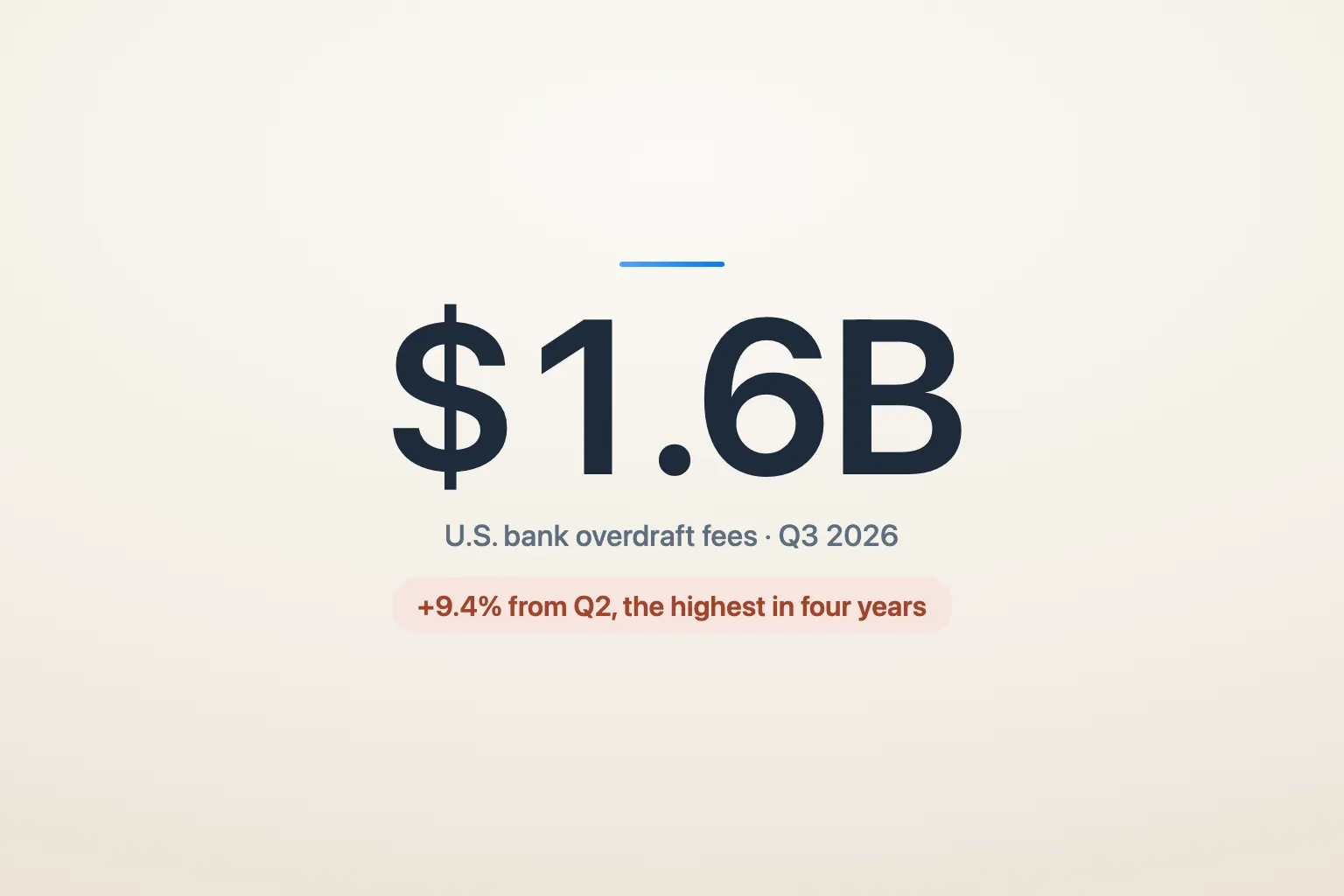
Overdraft fees collected by U.S. banks have climbed to their highest level in four years, according to newly reported banking data. In the third quarter of 2026, banks collected about $1.6 billion in overdraft fees. Fee revenue increased by approximately 9% from the previous quarter, signaling a reversal from the declines that followed widespread changes to bank overdraft policies.
The increase was not uniform across banks. Bank of America's overdraft-fee revenue has risen 49% since the first quarter of 2025, reaching $55 million. Even after that increase, the bank collected substantially less from overdraft fees than JPMorgan Chase or Wells Fargo.
A shift in the recent trend
The latest increase follows several years in which banks reduced or eliminated certain overdraft and insufficient-funds fees. In 2023, banks with more than $1 billion in assets reported approximately $5.83 billion in combined overdraft and insufficient-funds fee revenue. That was about half the amount reported in 2019 and 24% below the 2022 total.
By 2023, however, the decline in overdraft-fee revenue appeared to be slowing as major policy changes took effect and additional changes became less common, according to the Consumer Financial Protection Bureau. The newly reported 9% increase suggests that overdraft fees are again becoming a larger source of revenue for some banks.
Why the increase matters
An overdraft generally occurs when a bank pays a transaction even though the customer's account does not contain enough money to cover it. Depending on the bank's policies and the type of transaction, the customer may then be charged a fee.
The latest figures do not necessarily mean that every bank increased its fee or that every customer is paying more. They show that, in the aggregate, banks are collecting more overdraft-fee revenue than they did during the previous reporting period.
The broader takeaway is that the sharp reductions in overdraft-fee revenue seen earlier in the decade may have leveled off. Although current collections remain below pre-pandemic levels, the recent increase places renewed attention on how overdraft programs operate and how much revenue banks generate from customers whose account balances fall below zero.
Sources & further reading
- Reuters: U.S. bank overdraft fees jump 9% to four-year high, data shows (November 13, 2026), as published by The Spokesman-Review
- CFPB: Overdraft/NSF revenue in 2023 down more than 50% versus pre-pandemic levels (April 24, 2024)
General information, not advice about your circumstances. Read the original sources for their full definitions and context. Statistics describe the stated period, not a personal outcome.