News
U.S. inflation rose in September as gas prices jumped.
Gasoline accounted for more than half of September's increase. Food prices held steady, and housing costs kept rising.
What happened
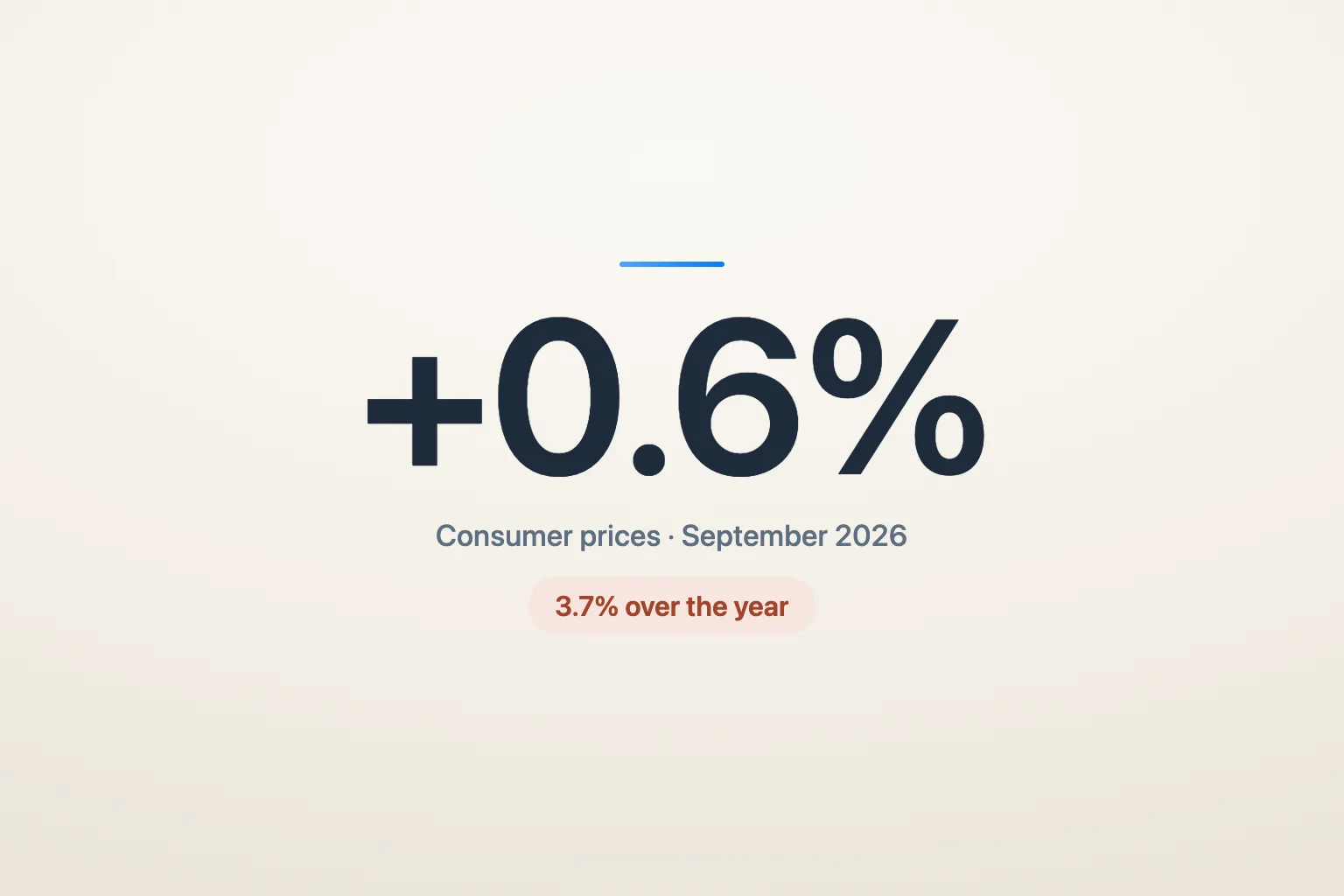
U.S. inflation picked up in September 2026, mainly because gasoline and other energy prices rose sharply. The Consumer Price Index, which measures the prices people pay for everyday goods and services, increased 0.6% from August to September, according to the U.S. Bureau of Labor Statistics (BLS). Over the past year, prices were up 3.7%.
Gas prices led the increase
Gas prices were the biggest reason inflation rose. The gasoline index jumped 9.1% in September and accounted for more than half of the overall monthly increase. The broader energy index rose 5.2% for the month and was up 20.4% from a year earlier.
Food, housing, and everything else
Food prices were more stable. Overall food prices did not change in September. Food eaten at restaurants rose slightly, while grocery prices dipped a little. Over the past year, food prices increased 2.5%.
Housing costs also continued to rise. The shelter index increased 0.4% in September. Core inflation, which leaves out food and energy because they can move around a lot, rose 0.3% for the month and 2.6% over the past year.
Other categories that became more expensive included recreation, used cars and trucks, education, airline fares, medical care, and clothing. Communication costs were one of the few areas that declined.
What it means for households
For everyday consumers, the report means inflation is still a problem, even though some parts of the economy are cooling. Higher gas prices can quickly affect household budgets, especially for people who drive often. The September numbers may also affect what the Federal Reserve does next with interest rates, since stronger inflation can make rate cuts less likely.
Sources & further reading
General information, not advice about your circumstances. Read the original sources for their full definitions and context. Statistics describe the stated period, not a personal outcome.