News
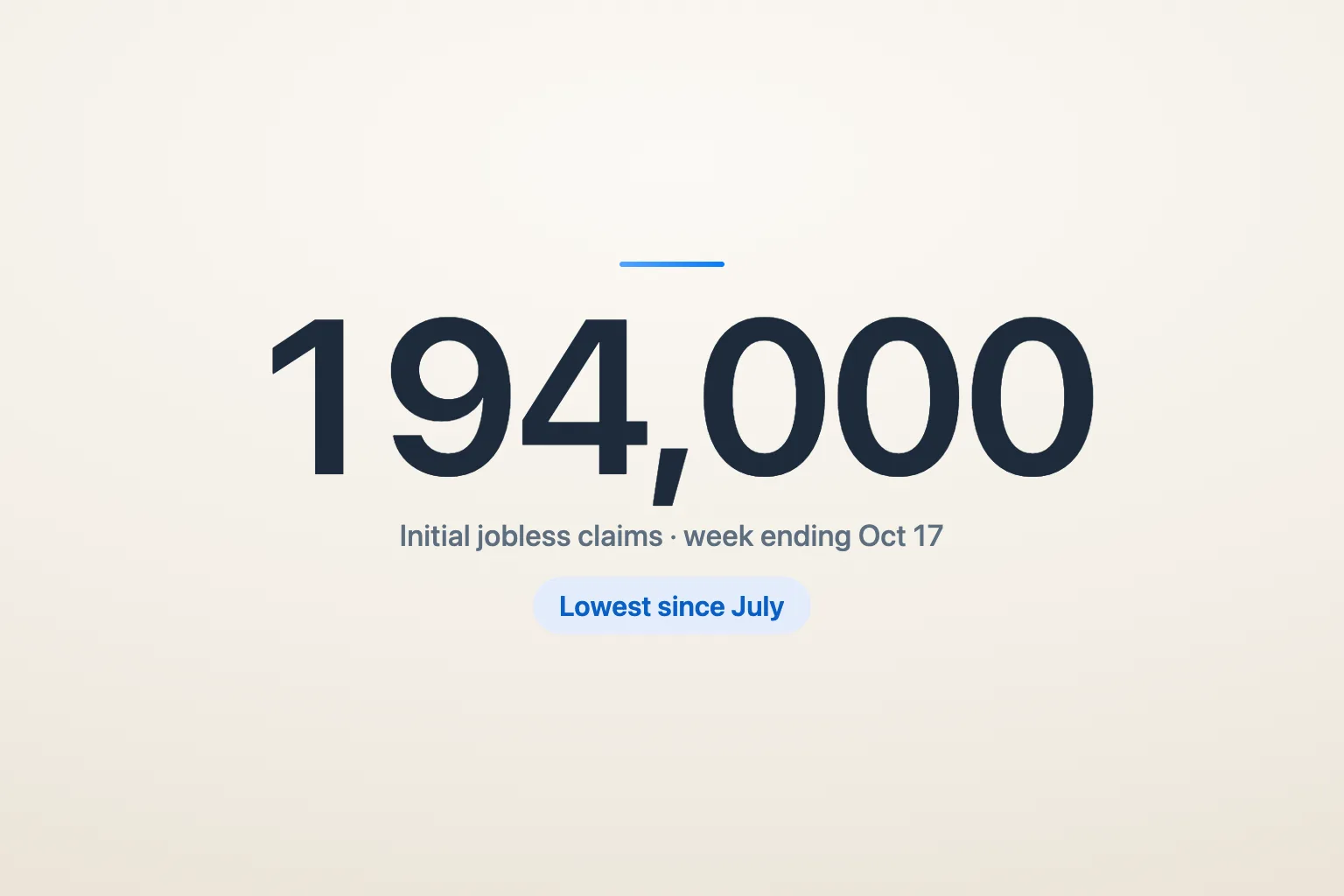
U.S. weekly jobless claims fall to their lowest level since July.
Layoffs remain historically low, but hiring is slow: claims fell to 194,000 while September added only 29,000 jobs.
The numbers
The U.S. labor market continues to show resilience, as weekly jobless claims fell to their lowest level since July 2026. For the week ending October 17, 2026, initial unemployment claims dropped by 6,000 to 194,000, below economists’ forecasts, according to the U.S. Department of Labor. This reflects a labor market where layoffs remain historically low.
Continuing claims, which track the number of people receiving unemployment benefits after their initial claim, were 1.728 million in the week ending October 10, about 219,000 below the same week a year earlier. The four-week moving average of initial claims, a measure that smooths out weekly swings, fell to 197,750.
Low hiring, low firing
Economists attribute the low level of claims to a “low-hire, low-fire” environment, where employers are holding onto workers despite slower job growth. Nonfarm payrolls increased by only 29,000 jobs in September, reflecting challenges such as a shrinking labor pool and slower hiring.
What it means for workers
For workers, this data suggests that while layoffs are rare, job opportunities may also be limited in certain sectors. Those seeking employment may need to explore industries with higher demand or consider upskilling to improve their prospects.
Sources & further reading
- U.S. Department of Labor: Unemployment Insurance Weekly Claims (release of October 22, 2026; this link shows the latest week)
- BLS: The Employment Situation, September 2026 (October 2, 2026)
General information, not advice about your circumstances. Read the original sources for their full definitions and context. Statistics describe the stated period, not a personal outcome.